

Pollinator Gardens for tiny spaces
Pots that are mini-summer meadows and pollinator-friendly

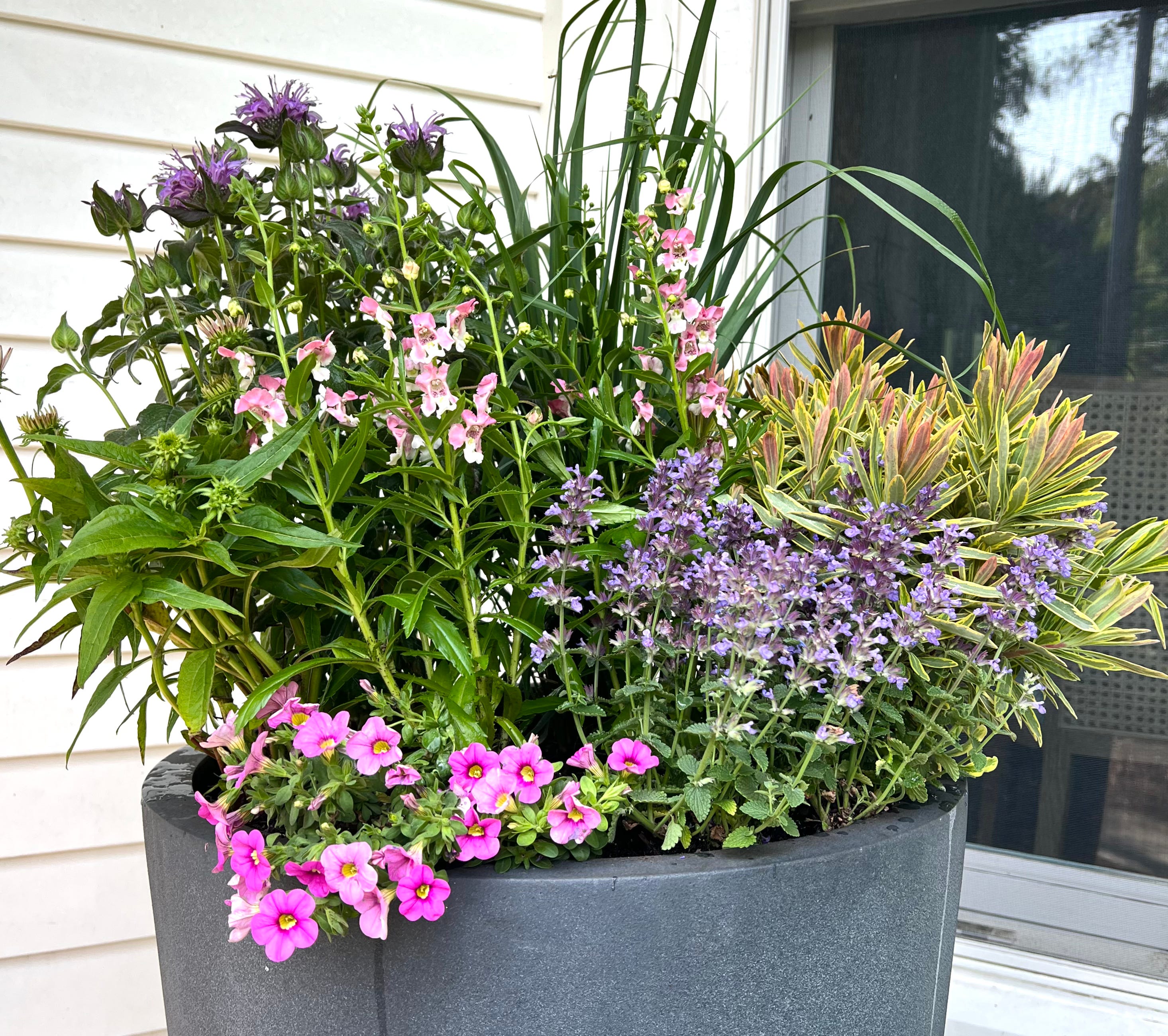
How can we make our homes and gardens more beneficial to butterflies, bees, moths, hummingbirds, and other creatures that help with pollination? Planting pollinator-friendly plants is the first step. The easiest and simplest way to start is with a pollinator container garden. It combines the beauty of a lovely planter with the benefits of supporting these insects and birds. I recently planted a trio of these containers at a client’s home. Filled with native plants, perennials, grasses, and some annuals, they were like mini summer meadows. The bees were buzzing on the plants before I could even start to plant!
Let’s start with which plants to use. I usually start by selecting native perennials that are native to my region. Pollinators love them, and they provide lovely flowers and interesting foliage. Unless you have a massive planter (and if you do, fantastic), you can look for slightly smaller-sized versions of these perennials. Here are some of my favorites for planters (and gardens, too):
Bee Balm (the bee above is on a bee balm plant)
Coneflowers (so many color options!)
Delphinium
Lupine
Columbine (for spring pots)
Phlox
Coreopsis
Rudbeckia
Salvia
Sedum
Sometimes I also include non-native perennials that perform well in my area and that are popular with pollinators. Catmints, foxglove, shasta daisies, and euphorbia are all great additions for bountiful planters and gardens.
What else to add? Don’t forget to include a grass. They not only provide habitat and nesting sites for pollinators, but also give us the height that a container garden design needs. As a double bonus, grasses add movement to your design. Here are some favorites for planters:
Miscanthus
Pink Muhly Grass
Calamogrostis ‘Karl Foerster’
Switchgrass
Fountain Grass (such as the dwarf ‘Hameln’)
Lastly, when I’m designing pollinator gardens for pots, I like to include some annuals. Not only do they support the insects and birds, but they also provide continuous flowers throughout the season when many perennials have a shorter blooming period. Additionally, from a design perspective, annuals can provide the trailing aspect that we often want for our containers. Here are some that I like to use:
Lobelia (some varieties trail)
Cosmos
Calibrachoa (for trailing)
Angelonia
Salvia (annual varieties can be great for height)
Scaevola (for trailing)
Firecracker plants
The plants listed above are just a start; there are many more that support pollinators. See which plants look healthy when you visit your local nursery. Ask them questions and combine your plants for a bountiful and blooming pot. Once planted, don’t forget to deadhead your flowers. This will keep them blooming longer.
Looking for more information on pollinator gardens? These articles and links all provide useful information:
A helpful list of annuals for pollinator gardens from Proven Winners: 14 Great Annuals for Pollinators
Garden Gate Magazine’s suggestions on pollinator garden plant combinations: Pollinator Garden Plant Pairings
Garden Design Magazine’s list of their favorite pollinator plants: 30 Pollinator Plants to Grow in Your Garden
Living in New England? This is a helpful compilation of native pollinator plants from the Commonwealth of Massachusetts: Choosing Pollinator-Friendly Native Plants in Home Gardening or Landscaping. Check your state for similar lists.
So if you are short on space but want to help the pollinators, add a pollinator-friendly pot to your home or garden! Want to watch this one being planted? Check out my Instagram!
Happy Gardening!
Susan